Marking National Hoarding Awareness Week 2026
Posted on 15 May 2026
Did you know that hoarding is considered a mental health condition?
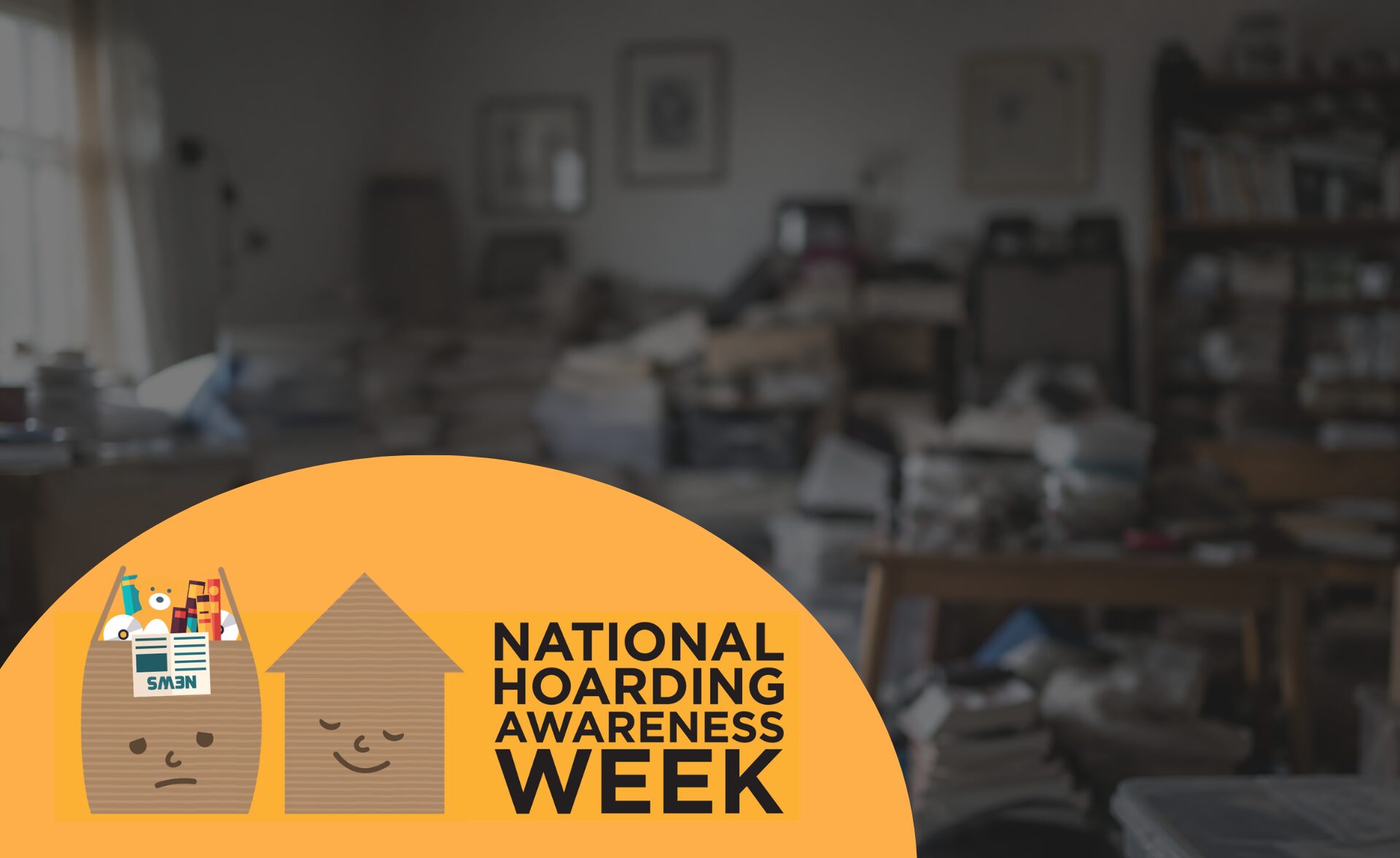
For this National Hoarding Awareness Week, we wanted to shine a light on this often misunderstood condition and help you get support if you are struggling.
Hoarding disorder is when you keep or collect lots of things and it is affecting your life and maybe your home. You might find yourself strongly attached to these things and find it very difficult to get rid of them.
Sometimes it’s not always clear if you are living with hoarding disorder. Signs of hoarding disorder can be:
- Difficulty letting go of things
- Excessive accumulation of items
- Emotional attachment to items
- Inability to live in your home or access areas or rooms as you would wish
- Avoidant behaviours to reduce feelings of anxiety and distress
- Difficulty recognising risks
Taking those first steps to seek help for your hoarding behaviour can feel really difficult. If you would like to find out more about hoarding disorder and the feelings associated with it, please click on the links below:
Understanding Hoarding Disorder
Hoarding as a mental health condition- Mind
Hoarding as a mental health condition – NHS
Awareness of Hoarding as a condition
Recently, our Housing team took part in a Hoarding Awareness Lunch and Learn session, facilitated by the East Sussex Housing Partnership Lead. The session offered valuable insight, helping to strengthen and embed our existing experience and good practice in supporting tenants with hoarding disorder.
Jayne Atkins, Manager of our Housing Services, says, “Hoarding is a recognised mental health condition, and for many it can be difficult to engage with support due to feelings of shame and anxiety. That’s why our approach is person-centred—focused on building trust, working in partnership with tenants and professionals, reducing risks, and supporting lasting, positive change.”
Lived experience of hoarding
We spoke to a client who received support from Southdown around his hoarding behaviour after he was threatened with eviction by his private landlord. He says,
“The hoarding started with my depression. The depression started with the loss of a close friend and neighbour. I was depressed for seven years and that’s when the hoarding bloomed.
When I’m depressed I buy things to make myself feel better. With hoarding it’s about getting yourself attached to things. They’re like friends who come to stay and don’t leave.
Before I started hoarding, my studio flat was a nice big 20ft by 10ft room. And then after hoarding all that space got filled up and I was sleeping in a small space on the floor by the front door.
Having my Support Worker work with me has been a weight off my mind. Subconsciously in the back of your mind, you realise you have someone there for you. For the first time I realised there is support out there and that makes me feel relaxed and happy.”
If you live with hoarding disorder, you are not alone. Please speak to your GP if your hoarding behaviour is affecting your life. If you are a housing association or council tenant, you can also approach your Housing Officer for support.